Originally published in International Cement Review as “Advanced adsorbents for carbon capture retrofits”, October 2026. Republished with permission.
novoMOF introduction
Cement’s process emissions make carbon capture essential for deep decarbonisation. In this article, originally published in International Cement Review, we explore why compact, modular adsorption technologies - including industrial-scale MOFs - could play an important role in retrofitting the existing cement fleet.
Download the official ICR reprint (PDF)
International Cement Review · October 2026
While efficiency, alternative fuels and clinker substitution can reduce carbon emissions in the cement industry, they cannot eliminate those released during limestone calcination. Therefore, for the existing global cement industry, carbon capture is essential. The challenge now is to develop capture technologies that are efficient, compact, modular and practical to retrofit: advanced adsorbents, including metal-organic frameworks, could play a significant role in meeting this challenge.
by novoMOF AG, Switzerland
 Cement production’s core process involves the calcination of limestone: calcium carbonate (CaCO₃) is heated to around 900°C and splits into lime (CaO) and CO₂: CaCO₃ → CaO + CO₂.
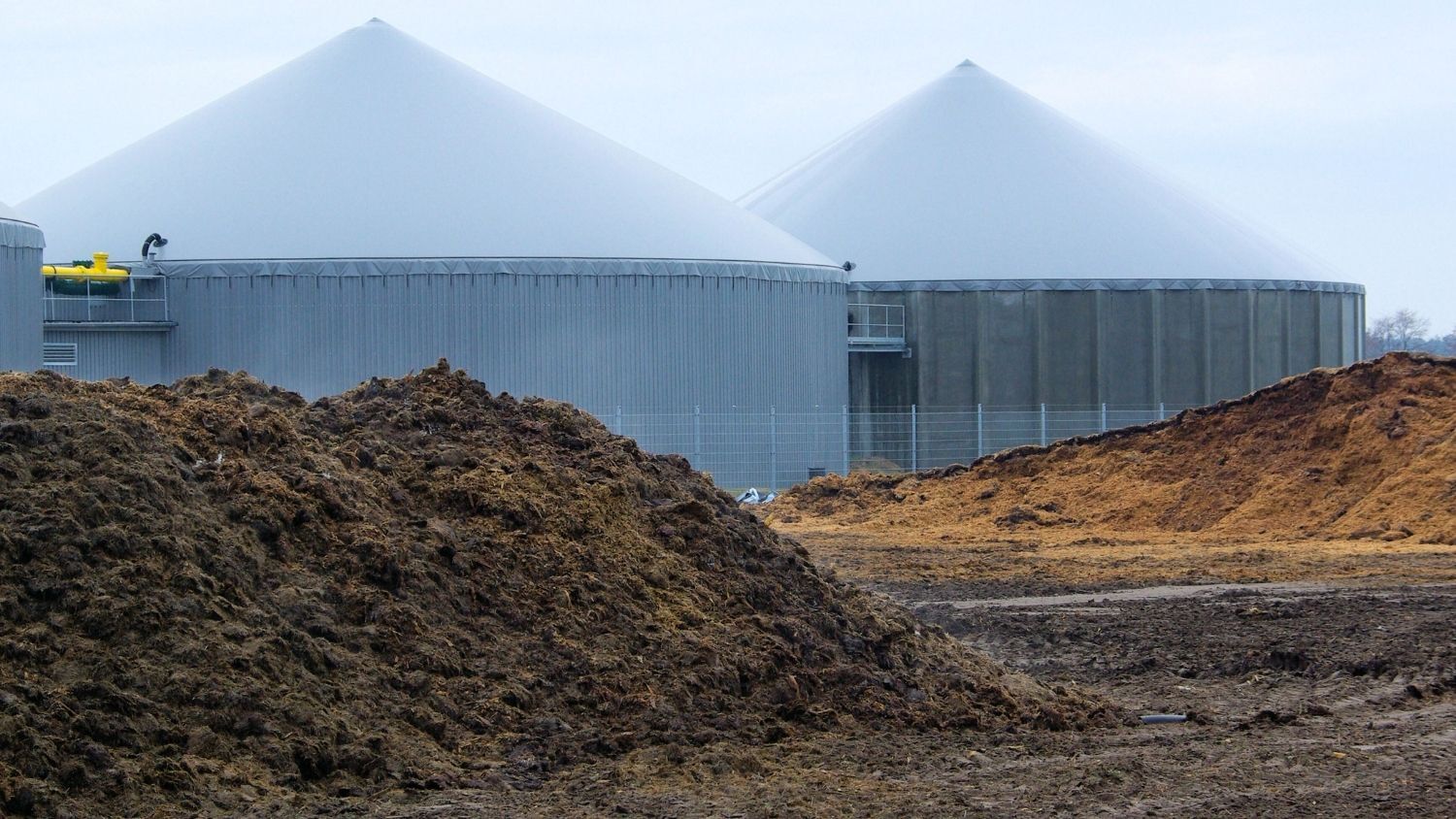
Roughly 60 per cent of a cement plant’s direct CO₂ emissions come from this chemical reaction, not from fuel combustion. Therefore, switching entirely to low-carbon fuels can reduce only the fuel-related share of direct emissions. The process emissions remain unless the chemistry changes or the CO₂ is captured.
The scale makes carbon capture unavoidable
Producing one tonne of cement typically releases 0.6-0.8t of CO₂, depending on clinker factor, kiln efficiency, fuel mix and accounting boundary. As a result, a single plant producing around 1Mta of clinker can emit 0.5-1Mta of CO₂ and larger or older plants can reach substantially higher emissions.
Efficiency gains, alternative fuels and clinker substitution all help, and they should be pursued aggressively, but they cannot eliminate the process emissions from limestone calcination. That is why the GCCA’s net-zero road map identifies carbon capture, utilisation and storage (CCUS) as the largest single lever for the sector, contributing around 36 per cent of planned reductions by 2050.
Local product, distributed problem
Cement is a high-volume, relatively low-margin commodity. Transport costs and logistics typically limit the economic supply radius of a plant to a few hundred kilometres, which is why cement plants are distributed across many regions, close to limestone quarries and construction markets.
Therefore, production cannot simply be consolidated into a handful of “green mega-plants”. Every region needs its plants, so every plant needs its own capture solution on site or nearby. Cement decarbonisation is a technology deployment challenge across thousands of medium-sized facilities, where modularity and retrofitability are essential.
New kiln technologies mostly serve newbuilds
Innovation inside the kiln is real. Oxyfuel combustion uses oxygen-enriched combustion instead of ambient air to create a flue gas with a higher CO₂ concentration, which can make capture easier. Novel low-carbon clinker chemistries are also advancing.
However, these approaches intervene directly in the heart of the production process. Oxyfuel conversion generally requires substantial modification of the kiln line, as well as an air separation unit and a CO₂ purification unit. In practice, such changes are best suited to new plants or major rebuilds, decisions that are made only once every few decades. Most plants that will emit in 2040 already exist today. Oxyfuel technology for cement is moving towards commercialisation, but broad deployment is still at an early stage.
Retrofits require a true end-of-pipe solution
For the existing fleet, carbon capture must often be added downstream of the kiln process. The operational requirements are strict: cement kilns run continuously for months and every hour of unplanned downtime means lost revenue. Therefore, it is recommended that a viable retrofit:
- avoids interference with clinker production
- is modular and compact, sized to the plant, expandable in stages and installable without long production stops
- is straightforward to integrate, operate and maintain.
Conventional amine scrubbing presents several challenges: large absorption columns, solvent handling and degradation, and substantial heat requirements. In many cases, this creates a need for deep integration with the plant’s energy system or for costly dedicated steam generation.
Why advanced adsorption technologies are emerging
Technically, cement is one of the most attractive industrial use cases for adsorption-based carbon capture. Cement kiln flue gases typically contain around 15-30 volume per cent CO₂, significantly higher than many other industrial sources. In addition, many plants have low-grade waste heat streams that may be usable for regeneration, depending on the process configuration.
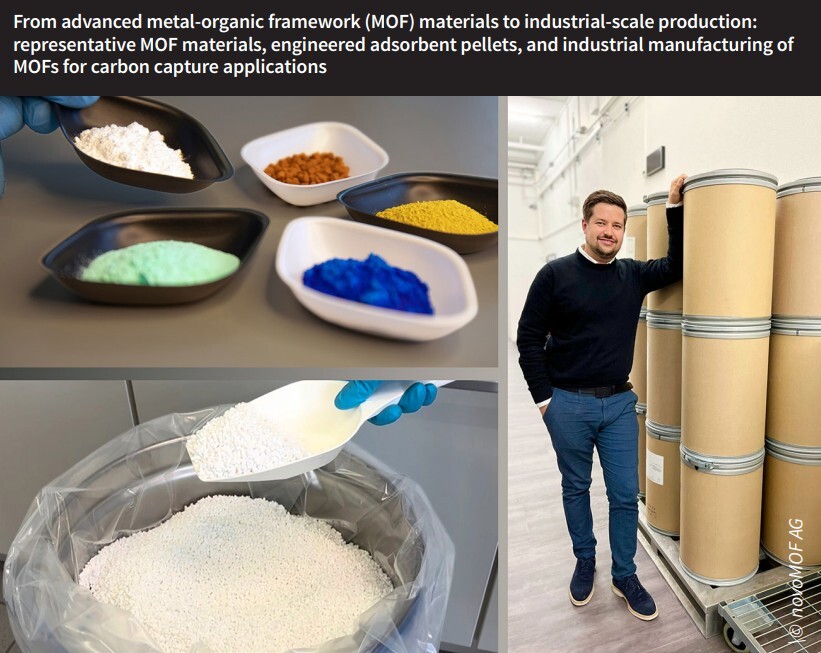
Advanced solid adsorbents can utilise this existing thermal energy while avoiding the solvent handling associated with conventional amine systems. Among the most promising adsorbent materials are metal-organic frameworks (MOFs), which can combine high CO₂ selectivity, low regeneration temperatures and the potential for compact, modular capture systems with lower energy demand and smaller footprints.
Recent advances in industrially scalable MOFs have expanded the potential of adsorption-based carbon capture beyond laboratory research. Their ability to operate at low regeneration temperatures and/or low regeneration pressures, perform under humid flue gas conditions and allow for compact, modular system designs makes them particularly attractive for retrofit applications in the cement industry. As these materials continue to mature through pilot projects and close collaboration between material developers, process engineers and equipment suppliers, they have the potential to disrupt the technical and economic landscape of post-combustion carbon capture.
Commercial deployment will depend not only on materials innovation, but also on collaboration between adsorbent developers, engineering companies, equipment suppliers and cement producers. This emerging ecosystem is helping translate promising laboratory advances into pilot projects and scalable industrial capture systems.
Additionally, the commercial success and worldwide implementation of capture technologies depend critically on a suitable legislative and political framework that actively supports piloting, developing and maturing capture technologies. This also encompasses thought-out infrastructure for carbon usage, transport and storage.
Regulation is turning emissions into costs
Under the EU Emissions Trading System, free allowances for sectors covered by the Carbon Border Adjustment Mechanism (CBAM) are being phased out gradually between 2026-34 and this includes the cement industry. Step by step, this exposes EU cement production to a larger share of the full carbon price while also applying carbon-cost discipline to covered imports.
At the same time, public procurement and major construction buyers are starting to specify low-carbon cement, mirroring the green steel dynamic.
Storage falls into place
The old objection, “Capture it, then what?”, is increasingly being answered. Northern Lights (Equinor, Shell, TotalEnergies) operates Europe’s first open-access CO₂ transport and storage service, and began operations in 2025.
In Rotterdam Porthos is building infrastructure to store around 2.5Mta of CO₂ in depleted gas fields under the North Sea, with the system currently expected to become operational in the 2H27. Its initial capacity is already fully booked. Oil and gas companies are converting pipeline, offshore and subsurface expertise into CO₂ infrastructure, turning storage into a contractable service.
One constraint echoes cement’s own logistics: CO₂ transport is expensive. Plants near ports, coasts or emerging pipeline corridors will move first; inland plants will follow as networks expand. Therefore, location is a strategic variable in every cement CCUS business case.
.jpg?width=650&height=537&name=Brevik%20CCS%20(1).jpg) Brevik: the proof point
Brevik: the proof point
In June 2025 Heidelberg Materials inaugurated the carbon capture and storage (CCS) facility at its Brevik cement plant in Norway, the world’s first industrial-scale carbon capture facility in the cement industry. The plant is designed to capture around 400,000tpa of CO₂ (half the plant’s emissions). The captured CO₂ is liquefied and shipped to Northern Lights for permanent geological storage under the North Sea.
Brevik also created a product: evoZero, Heidelberg Materials’ carbon-captured near-zero cement. Brevik was built with substantial Norwegian government support and its value is as a blueprint: it proves the full chain from kiln to storage site. The task now is developing the next projects with improved profitability and techno-economics, using leaner capture technologies, lower energy demand and smaller footprints. That is exactly the gap next-generation adsorbents such as MOFs aim to close.
The regulatory debate - briefly and fairly
CCS policy remains contested. Supporters argue that it is indispensable for hard-to-abate sectors and that early public funding (EU Innovation Fund, Norway’s Longship, the US 45Q credit) turns pilots into investable projects, as it once did for solar. Critics counter that CCS can prolong fossil-fuel business models, that past power-sector projects have underdelivered and that long-term storage liability is unresolved. However, for cement the argument is structurally different from many industrial sectors. There is no renewable electricity or renewable fuel substitute for the CO₂ released by limestone calcination. The real debate is how regulation should be designed: who pays, who carries liability, how captured CO₂ is verified and how policy rewards efficient technologies.
An emerging opportunity: storing CO₂ in cement itself
Cement and concrete can also absorb CO₂. Through mineralisation, CO₂ reacts with calcium-bearing phases to form stable carbonates, partially reversing calcination and locking carbon into the built environment. Start-ups and industrial players are commercialising this by injecting CO₂ during concrete curing or mixing, or by carbonating recycled demolition aggregate. Volumes are still modest compared with kiln emissions and many of these routes require captured CO₂ as an input. Therefore, they are complementary to capture at the kiln, not a replacement. But the strategic story is remarkable: one of the world’s largest emitters could become one of its largest carbon sinks.
For cement, carbon capture is not one option among many - it is the core of the business case for keeping existing plants competitive.
The pieces are coming together: the Brevik project has proven the value chain, storage infrastructure is expanding and regulation is increasingly supporting the commercial deployment of CCS. The next challenge is to develop, test, evaluate and optimise capture systems that are suited to the specific needs of the cement industry. Continued advances in capture materials, process integration and system design are essential to reducing cost and accelerating adoption. Advanced adsorption technologies based on industrial-scale MOFs represent one promising pathway towards that objective.
Article first published in International Cement Review, October 2026 - CemNet.com.
Exploring carbon capture for an industrial application?
novoMOF develops and supplies industrial-scale MOFs and application expertise for energy-efficient point-source CO₂ capture.

.jpg)