Carbon Capture Technology World Expo · Hamburg · 2026
From material performance to process integration: what does it take to move MOF-based CO2 capture towards industrial deployment?
A high-performing MOF is only the starting point. In industrial carbon capture, the right solution depends on much more than the adsorbent itself. Flue-gas composition, available utilities and process requirements all influence how a capture system is designed and ultimately, its technical and economic viability.
At the Carbon Capture Technology World Expo in Hamburg, novoMOF CEO Daniel Steitz explored three critical decisions involved in piloting MOF-based CO2 capture systems.
Which MOF? Which process? Which shape?
These three choices must work together:
01
Which MOF?
Material selection depends on CO2 concentration, humidity, contaminants and other site-specific operating conditions.
CO2 level · Humidity · Contaminants
02
Which process?
Utilities available on site dictate process design and influence energy requirements, CO2 purity and recovery performance.
MOFs can operate using temperature-swing adsorption (TSA), pressure-swing adsorption (PSA), pressure/vacuum-swing adsorption (PVSA), or combined cycles (V(T)PSA).
TSA · PSA · PVSA · V(T)PSA
03
Which shape?
From granules and coatings to structured forms, MOF shaping influences pressure drop, adsorption kinetics, heat and mass transfer, and system integration.
Granules · Coatings · Honeycombs · Sheets
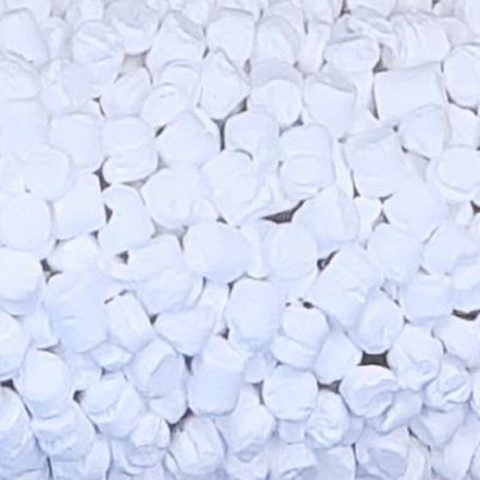
Granules
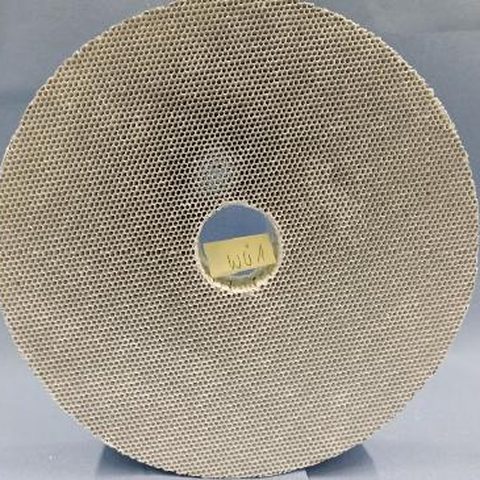
Coated structures
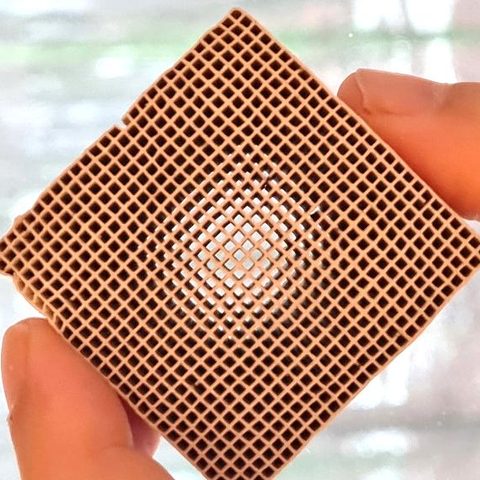
Extruded honeycomb
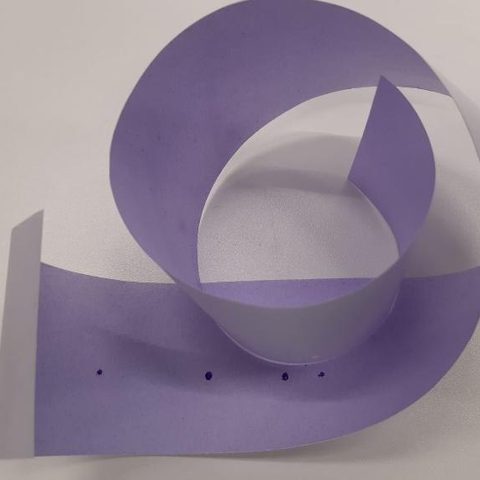
Thin sheets
MOF shaping options covered in the presentation. Shaping is evaluated against process requirements, scalability and techno-economics.
From lab validation to pilot
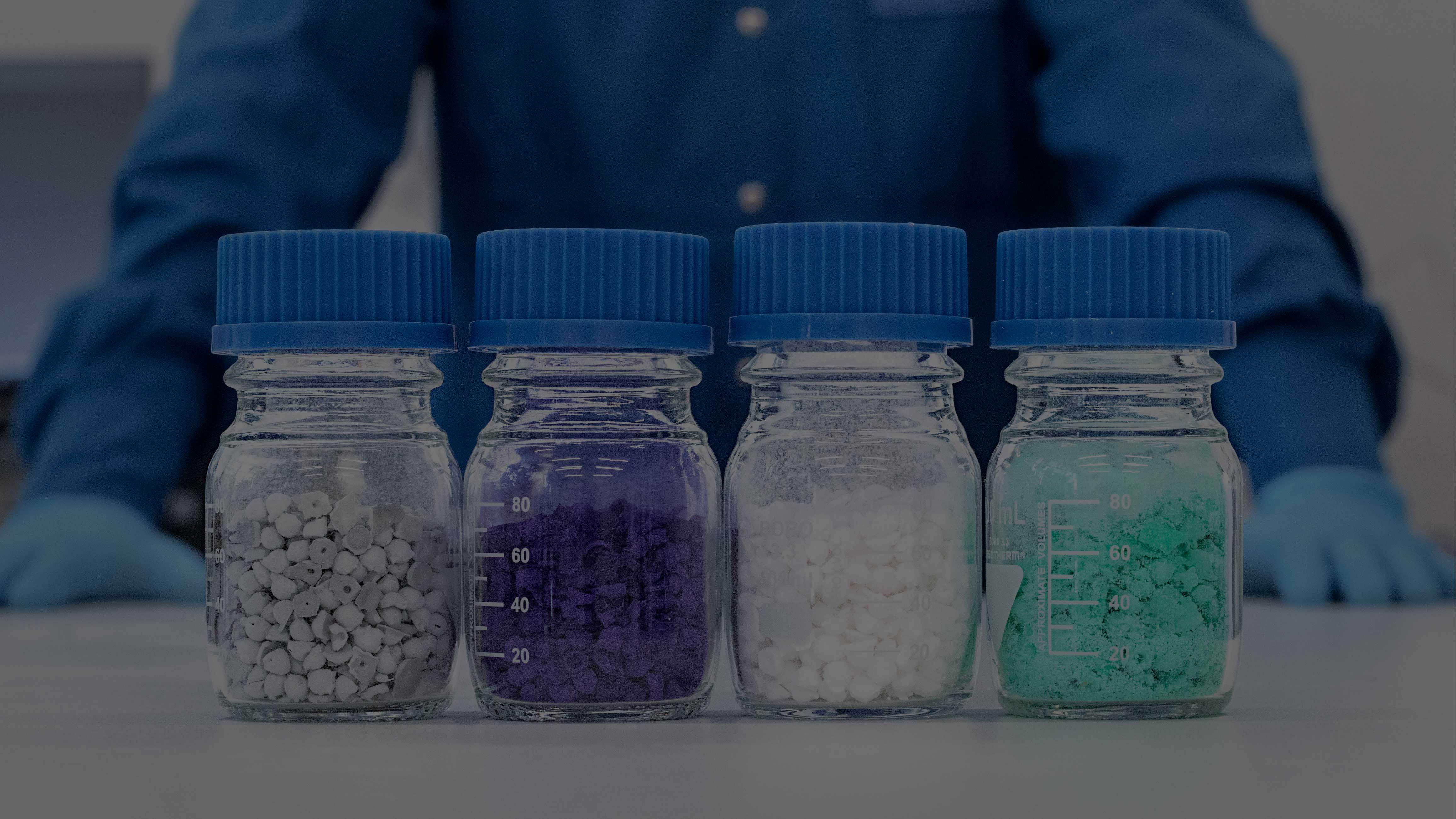
Whichever combination is chosen, it must ultimately work with the flue gas at the target site, which can contain moisture and contaminants such as SO2 and NO2. Before piloting, materials are therefore evaluated under controlled laboratory conditions. In one such exposure test, novoMOF MOFs maintained their CO2 adsorption capacity for more than 1,000 hours under humid SO2 / NO2 test conditions.
1,000+ h
CO2 adsorption capacity maintained in laboratory exposure testing
50 ppm SO2 / NO2 · humid · 40 °C · 42 days continuous
Laboratory test result. Real-world lifetime is site-specific and depends on the actual flue-gas composition and regeneration concept.
Laboratory results like these help de-risk the material choice, but they do not replace testing in real flue gas. That is the role of piloting: bringing material, process and shape together on site to generate the technical and operational data needed to evaluate performance, reduce deployment risks and inform future commercial-scale systems.
Explore the full presentation
In his Hamburg presentation, Daniel shares further insights into MOF performance, site assessment, process configurations and material shaping, along with novoMOF’s approach to carbon capture piloting.
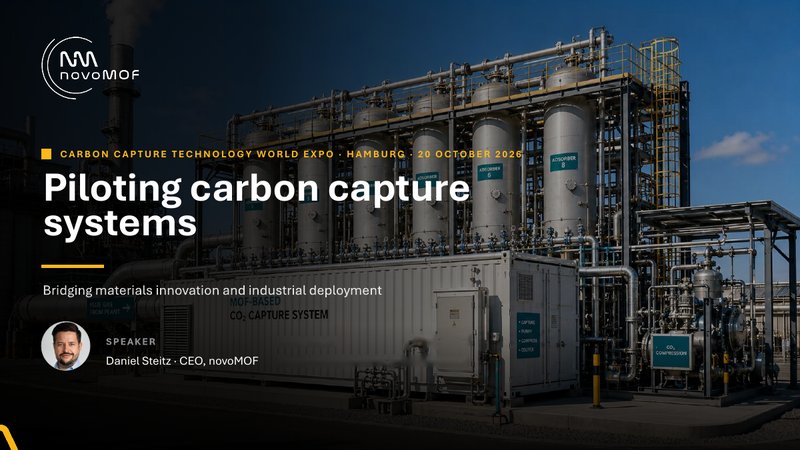
Presentation · PDF · 19 slides
Piloting Carbon Capture Systems
Daniel Steitz, CEO, novoMOF · Carbon Capture Technology World Expo, Hamburg, 20 October 2026
Enter your details below to download the full presentation ↓
Evaluating CO2 capture for a specific site or capture technology? Learn how novoMOF works with industrial emitters and technology providers.